MelanoMelanoMelano
Piazza G. MottaPiazza G. MottaPiazza G. Motta
Piazza Giuseppe Motta
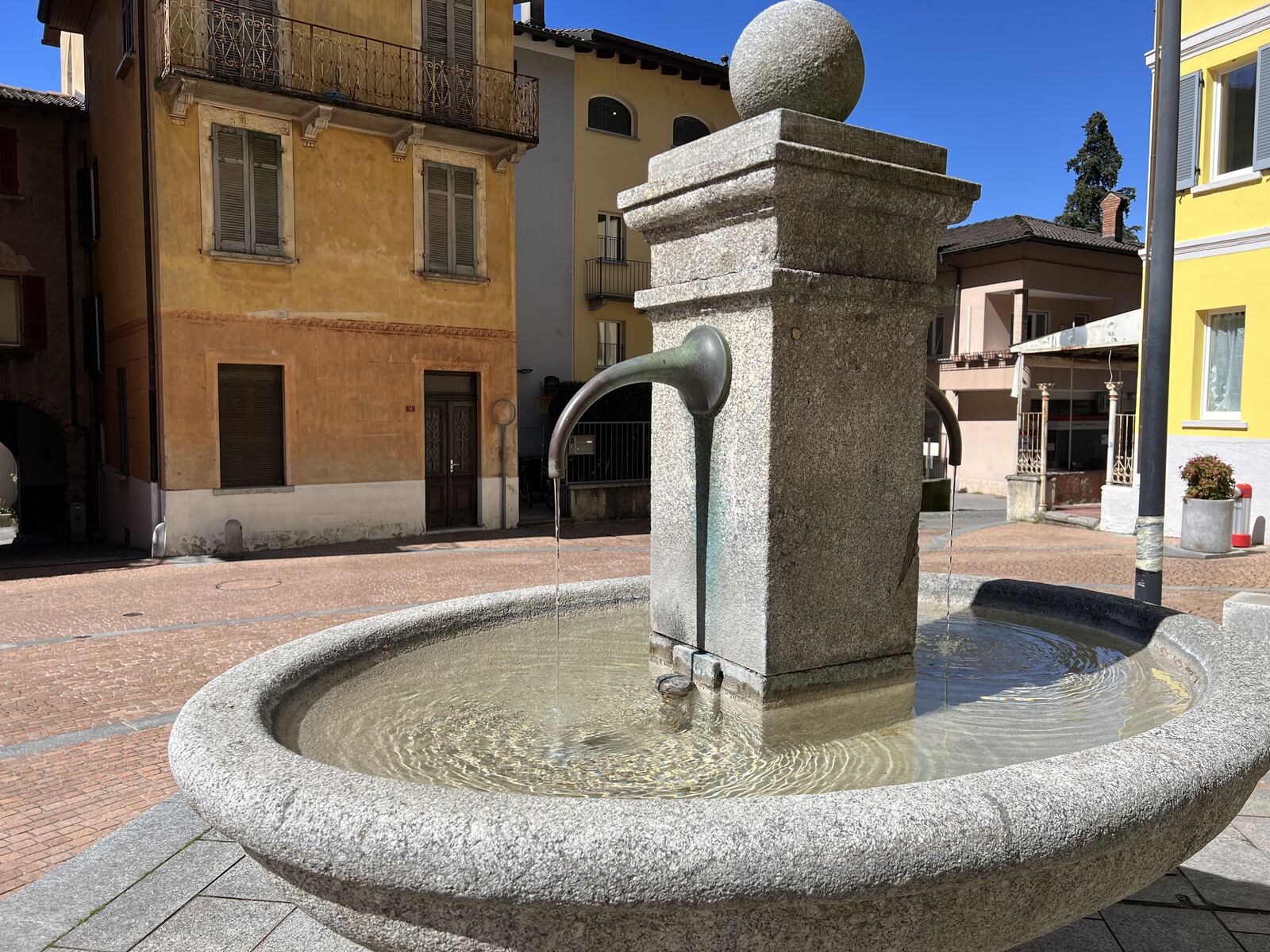
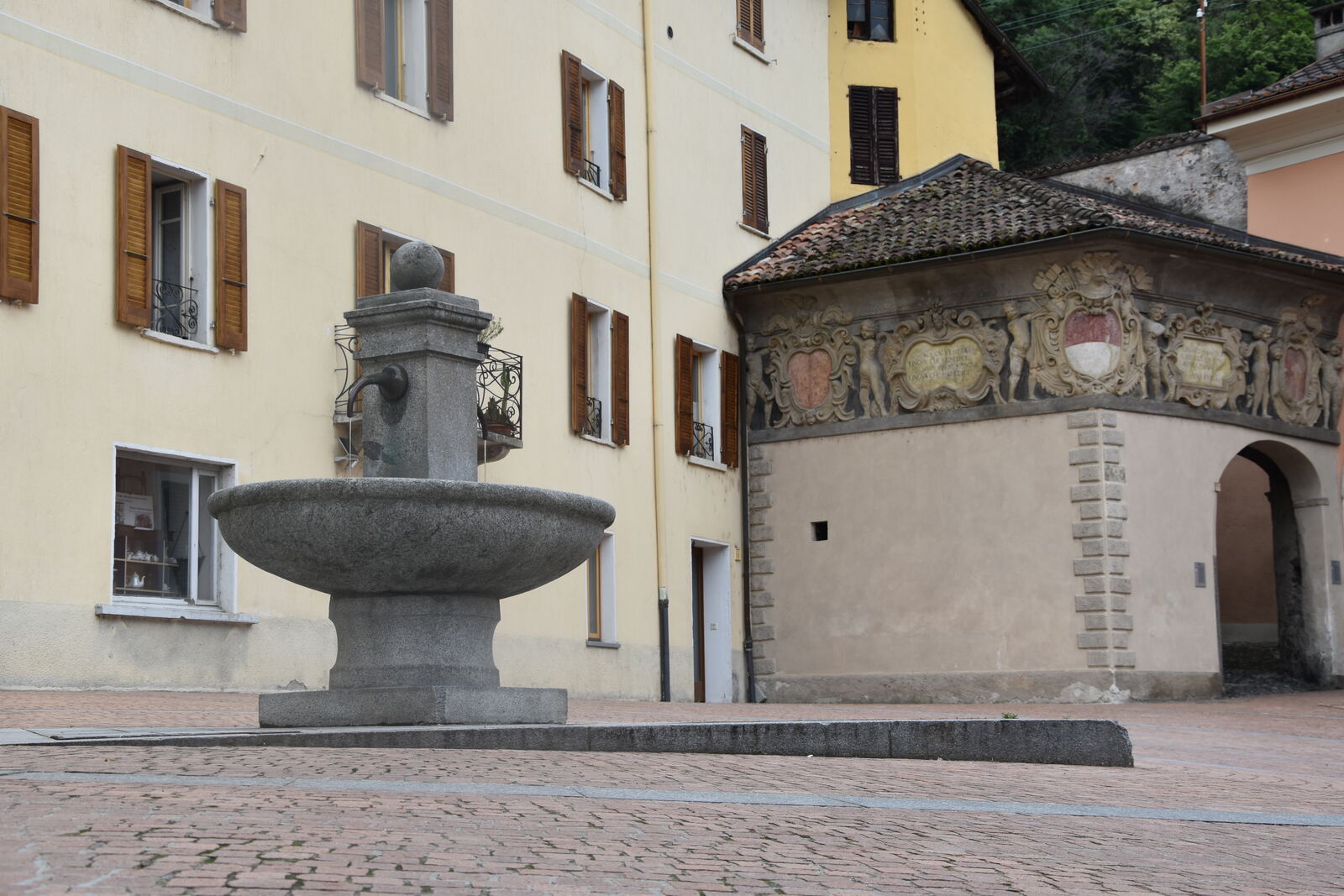
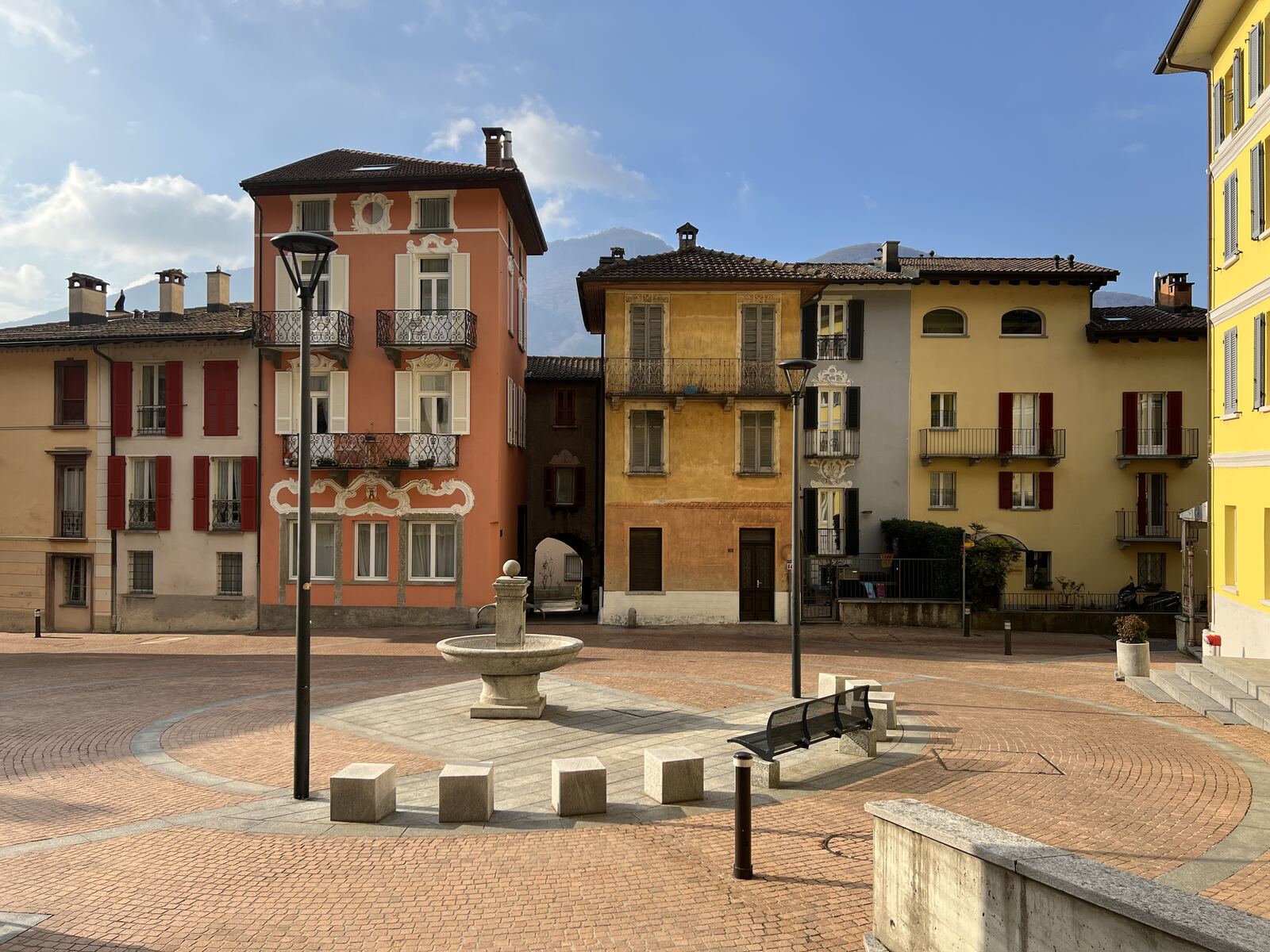
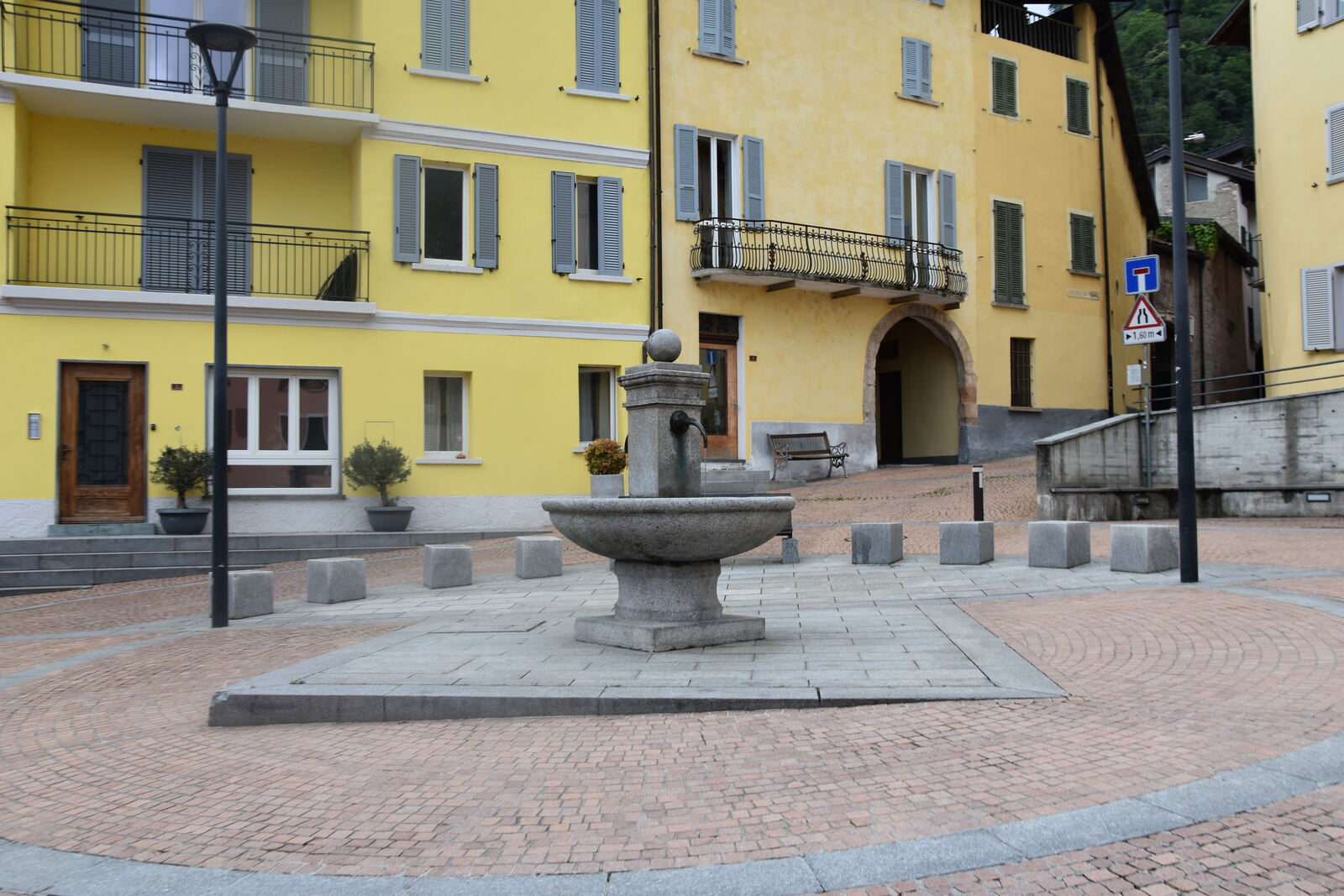
La piazza in lieve salita, pavimentata con cubetti di porfido e conci, arredata da una fontana in granito, è il fulcro dell’insediamento su cui convergono la via di transito principale e quella che conduce al Santuario della Madonna del Castelletto. Con la corona di edifici che circonda questo grande vuoto la piazza racchiude in sé gran parte delle epoche edificatorie del nucleo, che vanno dal medioevo all’età moderna. La presenza di edifici con porticati e colonnati lascia intendere che alla vita rurale della comunità si sovrapponeva una cultura d’importazione desunta dalla pratica migratoria. Come consueto è sulla piazza comunale che si affacciano gli edifici più rappresentativi. Tra questi si possono ricordare sul lato nord-est la signorile casa Polatta (ora Canavesi) con il suo seicentesco porticato ornato di stucchi e a sud il caseggiato commissionato verso la metà del XIX secolo dall’imprenditore Vincenzo Borsa a Luigi Fontana, l’architetto che progettò anche la chiesa parrocchiale e la filanda. Questo edificio ottocentesco fu in seguito alienato al conte Giuseppe Sizzo de Noris, un nobile trentino riparato a Melano per le sue simpatie filoitaliane, per poi passare a Gustav Salomon Gessner, ricco commerciante lombardo di origine svizzera che aveva acquisito anche la filanda Fogliardi.
Piazza Giuseppe Motta
The piazza has a slight uphill gradient and is paved with porphyry cubes and ashlars and furnished with a granite fountain. It is the fulcrum of the settlement on which the main transit route converges and that leading to the Sanctuary of the Madonna del Castelletto.
With the group of buildings that surrounds this great space, the square itself contains much of the construction eras of the nucleus, ranging from the Middle Ages to modern times. The presence of buildings with porticos and colonnades suggests that the rural culture of the community overlapped with an imported culture derived from migratory practices.
As usual, the most representative buildings are facing onto the town square. Among these you can recognise the Polatta ‘noble’ house (‘casa signorile’) (now Canavesi) with its seventeenth-century portico decorated with stuccos on the north-east side and to the south the tenement commissioned in the mid-nineteenth century by the entrepreneur Vincenzo Borsa to Luigi Fontana, the architect who also designed the parish church and the spinning mill.
This nineteenth-century building was later sold to Count Giuseppe Sizzo de Noris, a Trentino nobleman who was living in Melano for his pro-Italian sympathies before the building passed on to Gustav Salomon Gessner, a wealthy Lombard merchant of Swiss origin who had also acquired the Fogliardi spinning mill.
Piazza Giuseppe Motta
Der leicht ansteigende und mit Porphyr-Bruchsteinen gepflasterte Platz, auf dem sich ein Granitbrunnen befindet, bildet den Mittelpunkt der Siedlung, an dem die Hauptdurchgangsstrasse und die Strasse zur Kirche Madonna del Castelletto zusammenlaufen. Umrahmt von den Dächern der Gebäude, die diesen Platz umschliessen, beherbergt er selbst einen Grossteil der baulichen Epochen des Gemeindekerns, die vom Mittelalter bis hin zum modernen Zeitalter reichen. Die Gebäude mit ihren Bogengängen und Säulen geben zu verstehen, dass sich das ländliche Leben der Gemeinde mit einer Importkultur überlagerte, die aus der Migrationspraxis abgeleitet werden kann. Wie üblich sind auch in Melano die repräsentativsten Gebäude rund um den Gemeindeplatz angesiedelt. Zu diesen gehören nordöstlich des Platzes das alte Wohnhaus Polatta (heute Canavesi) mit seinem stuckverzierten Bogengang aus dem 17. Jahrhundert und im Süden der Häuserblock, der gegen Mitte des 19. Jahrhunderts durch den Unternehmer Vincenzo Borsa in Auftrag gegeben und durch Luigi Fontana errichtet wurde. Luigi Fontana ist der Architekt, der auch die Pfarrkirche und die Spinnerei entwarf. Dieses aus dem 19. Jahrhundert stammende Gebäude wurde später dem Grafen Giuseppe Sizzo de Noris verkauft, einem Trentiner Adligen, der sich wegen seiner philoitalienischen Sympathien nach Melano zurückzog, um später an Gustav Salomon Gessner überzugehen, einem reichen lombardischen Kaufmann mit schweizerischem Ursprung, der auch die Spinnerei Fogliardi gekauft hatte.